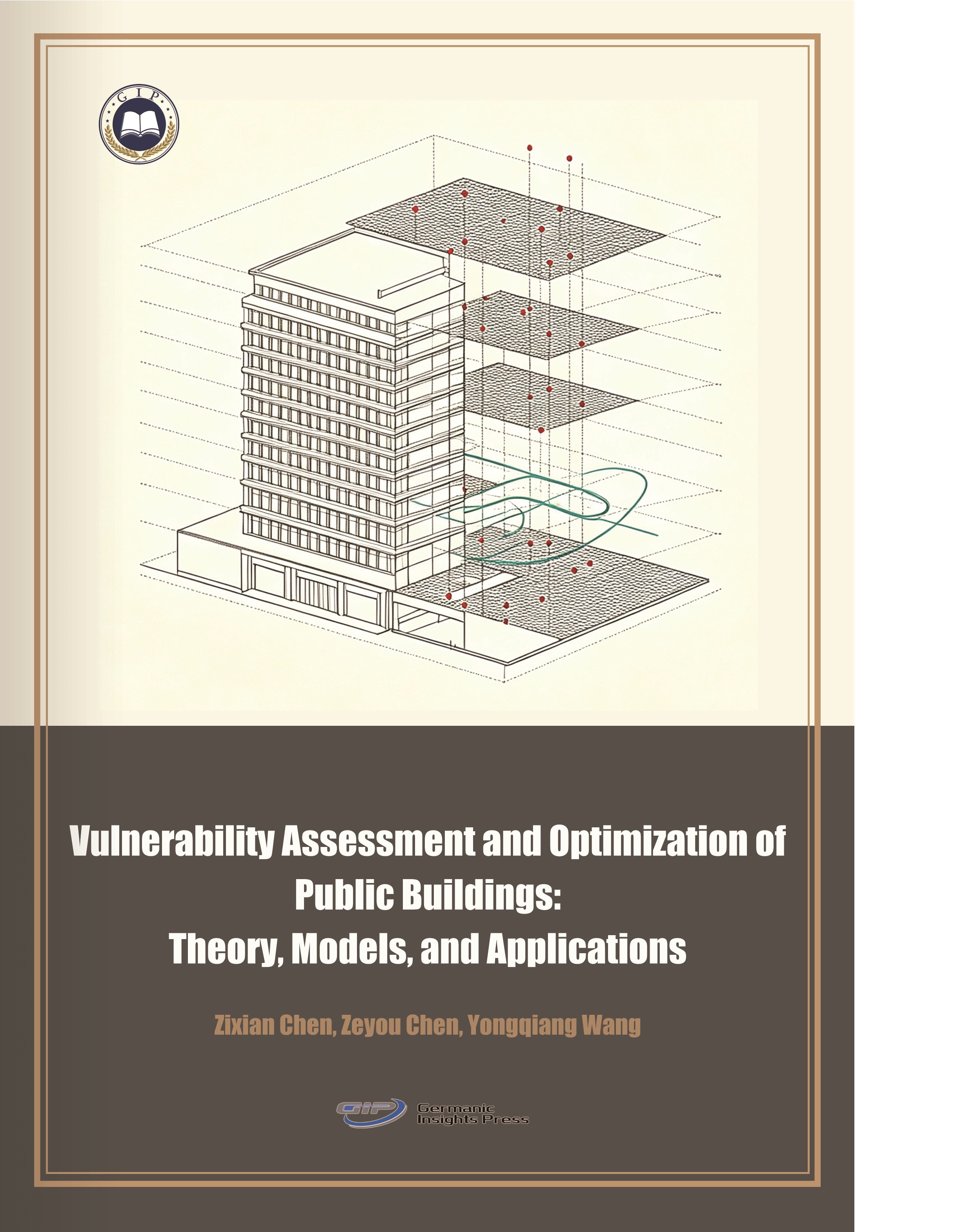
Vulnerability Assessment and Optimization of Public Buildings: Theory, Models, and Applications
Published Date: July 27th, 2026
Page Length: 403
Language: English
ISBN: 978-3-69234-001-2
Price: £36.30
Introduction
DOI: 10.65039/978-3-69234-001-2
With the ongoing advancement of China’s new urbanization and resilient city development initiatives, public buildings—serving as critical infrastructure for delivering essential public services such as healthcare, education, transportation, and government functions—are vital disaster-resilient structures whose operational safety directly impacts public lives, property, and urban stability. Buildings like hospitals, schools, major commercial districts, and transportation hubs accommodate high populations and multifunctional uses. Meanwhile, numerous existing public buildings constructed in the last century suffer from structural aging, inadequate disaster prevention facilities, and insufficient maintenance. Compounded by the frequent occurrence of combined disasters—including extreme rainfall, strong earthquakes, and typhoons worldwide—the risk of disaster losses in public buildings continues to rise. At the national governance level, policies such as the Xiantai Disaster Reduction Framework and domestic resilient city development guidelines have been introduced, explicitly requiring the establishment of a comprehensive lifecycle risk management system for public buildings. How to scientifically quantify building vulnerabilities and develop precise renovation plans has thus become a core challenge urgently needing resolution in urban safety management.